CoQ10
INCI: Coenzyme Q10
Coenzyme Q10 (CoQ10) is a fat-soluble quinone naturally produced in the body and essential for mitochondrial ATP synthesis. It also functions as a lipid-soluble antioxidant in cell membranes. In the EU, CoQ10 has no authorised health claims under Reg. 432/2012, so brands typically position it for cellular energy and heart function support, or co-formulate with nutrients that carry authorised claims.
- Energy metabolism
- Heart health
- Antioxidant support
At a glance
- Definition
- Coenzyme Q10 (CoQ10) is a fat-soluble quinone naturally produced in the body and essential for mitochondrial ATP synthesis. It also functions as a lipid-soluble antioxidant in cell membranes. In the EU, CoQ10 has no authorised health claims under Reg. 432/2012, so brands typically position it for cellular energy and heart function support, or co-formulate with nutrients that carry authorised claims.
- Common positionings
- Cellular energy production
- Heart function support
- Antioxidant defence
- Healthy ageing
- Post-statin maintenance
- Format suitability
- Reviewed for gummies and sachets — confirmed per project.
Where this ingredient fits in the DAT Supply catalogue
Every format chip links through to its manufacturing hub and to the private-label catalogue for that format. The category chip routes to the matching vertical hub on the categories index.
- Energy & performance
- Browse all ingredients
What it is
Coenzyme Q10 (CoQ10) is a naturally occurring, fat-soluble compound found in every cell of the human body. It plays a central role in the electron transport chain within mitochondria, where it facilitates the conversion of energy from food into adenosine triphosphate (ATP) — the primary energy currency of cells. CoQ10 also acts as a membrane-bound antioxidant, protecting lipids and proteins from oxidative damage.
Brands use CoQ10 in gummy supplements to target energy metabolism, cardiovascular health, and healthy ageing. It is one of the most familiar and commercially understood gummy actives across EU and US markets. While CoQ10 has no authorised health claims under EU Regulation 432/2012, its strong consumer awareness and well-documented mechanistic profile make it a high-value ingredient for premium positioning.
Origin and history
CoQ10 was first isolated from beef heart mitochondria by Dr. Frederick Crane and colleagues at the University of Wisconsin in 1957. Its chemical structure was elucidated the following year by Dr. Karl Folkers, who later synthesised the compound. The "Q" in CoQ10 refers to the quinone chemical group, and the "10" denotes the number of isoprenyl units in its side chain.
Industrial production of CoQ10 has evolved from extraction of animal tissues to fermentation using yeast and bacteria. Today, most commercial CoQ10 is produced via fermentation of the bacterium *Agrobacterium tumefaciens* or yeast strains, with Kaneka Corporation being the dominant global supplier. The fermentation process yields high-purity CoQ10 suitable for food supplement applications, including gummy manufacturing.
Scientific overview
CoQ10 exists in two interconvertible forms in the body: ubiquinone (the oxidised form) and ubiquinol (the reduced, antioxidant-active form). In the inner mitochondrial membrane, ubiquinone accepts electrons from complexes I and II of the electron transport chain and transfers them to complex III, driving ATP synthesis. Simultaneously, ubiquinol neutralises lipid peroxyl radicals, preventing oxidative damage to mitochondrial and cellular membranes.
Bioavailability of CoQ10 is limited by its high molecular weight and lipophilic nature. Absorption is enhanced when CoQ10 is taken with dietary fat or formulated with solubilisation technologies such as lipid-based delivery systems, micellisation, or nanoparticle formulations. The reduced form, ubiquinol, is more bioavailable than ubiquinone at equivalent doses, though both forms are used in supplements.
From a manufacturing perspective, CoQ10 is heat-stable and can be incorporated into gummy formulations without significant degradation. It is tasteless at typical use levels, which simplifies flavour masking. The primary manufacturing watchpoint is payload capacity — CoQ10 is a dense powder, and achieving doses above 100 mg per gummy may require larger gummy weights or multiple gummies per serving. DAT reviews payload constraints per project.
Why brands use CoQ10
CoQ10 occupies a well-established position in the supplement market, particularly for energy, heart health, and healthy ageing. Consumer awareness is high, and the ingredient benefits from decades of clinical research. Gummy formats offer a convenient, palatable delivery system for CoQ10, especially for consumers who struggle with swallowing capsules or tablets. The fat-soluble nature of CoQ10 aligns well with gummy formulations, which can incorporate oils and emulsifiers to enhance absorption.
From a formulation and manufacturing standpoint, CoQ10 is one of the more straightforward premium ingredients to work with in gummies. It is heat-stable, tasteless, and compatible with standard gummy processing conditions. The main tradeoff is cost — CoQ10 is a premium ingredient, and achieving clinically relevant doses (typically 100 mg–200 mg per serving) increases per-unit cost. Brands should also consider that CoQ10 is not vegan-suitable in most supply chains, which may limit positioning in plant-based ranges.
For pack copy, brands should avoid disease claims and the term "anti-inflammatory" in EU markets. Since CoQ10 has no authorised health claims under Reg. 432/2012, positioning should focus on general wellness language such as "supports cellular energy production" or "contributes to normal heart function" — noting that the latter is a structure-function claim, not an authorised health claim. Co-formulating with Selenium (authorised claim: "contributes to the protection of cells from oxidative stress") or Magnesium (authorised claim: "contributes to normal energy-yielding metabolism") can provide claim coverage. DAT reviews all claim wording per project to ensure compliance.
Formats this ingredient is reviewed for
DAT Supply covers gummy, capsule, softgel, tablet, powder, oral strip, liquid drop, shot, jelly and pet formats. The list below reflects every format this ingredient is reviewed for — chips link through to the manufacturing hub for each format. Final compatibility, dose and matrix are confirmed per project.
Formulation notes
Verified formulation reference across the formats this ingredient is reviewed for — the Supported formats section lists every product format this active is approved for, and the per-format Considerations section below covers matrix-specific guidance. Final formulation, dose and on-pack copy are confirmed per project.
- Gummy fit
- Good
- Heat stable
- Yes
- Soluble in matrix
- Yes
- Cost tier
- Premium
Forms available
- Ubiquinone (oxidised), Ubiquinol (reduced), Kaneka Q10™
Dosage reference
No EU NRV established for CoQ10. Brand positioning typically ranges from 30 mg to 200 mg per serving. Higher doses (150 mg–600 mg) are used in targeted formulations. DAT confirms dose per project based on target market and claim strategy.
Taste & sensory
Tasteless fat-soluble microdose — well-suited to gummy format with no flavour masking required.
Manufacturing notes
Gummy-optimised dosing; check payload constraints per gummy weight. DAT reviews payload capacity per project.
Per-format formulation notes
Safe-baseline considerations for each format this ingredient is reviewed for. Final formulation, dose and on-pack copy are confirmed per project.
Gummies
- Taste masking and aroma load against the cooked-base flavour — confirmed per project.
- Heat exposure during cooking; coated or encapsulated forms may be required — confirmed per project.
- Matrix choice (pectin vs gelatin) and its effect on ingredient stability — confirmed per project.
- Per-gummy dose and serving count needed to hit the label claim — confirmed per project.
Sachets
- Powder flow and dose accuracy at single-serve sachet weights — confirmed per project.
- Barrier requirements (oxygen, moisture) for the active — confirmed per project.
- Reconstitution behaviour when the sachet is dosed into water — confirmed per project.
EU-authorised health claims
EU-authorised wording for this ingredient is reviewed per project against Reg. 1924/2006 and the authorised list under Reg. 432/2012. No final claim wording is implied by this page.
Authorised at ≥15% NRV per daily serving. Claim wording must appear verbatim on consumer packaging. DAT reviews final pack copy per project against EU 1924/2006 and the authorised list under EU 432/2012.
CoQ10 is a permitted food supplement ingredient under EU Regulation (EC) 1925/2006. No authorised health claims exist under Reg. 432/2012. Brands should position CoQ10 using general wellness language or co-formulate with nutrients that carry authorised claims (e.g., Selenium for antioxidant, Magnesium for energy metabolism). DAT reviews claim wording per project.
Studies & evidence
External peer-reviewed sources and regulatory opinions. Citations only — DAT does not endorse the publishers.
Zozina VI, Covantev S, Goroshko OA, Krasnykh LM, Kukes VG·Current Cardiology Reviews·2018
Garrido-Maraver J, Cordero MD, Oropesa-Ávila M, et al.·Frontiers in Bioscience·2014
López-Lluch G, del Pozo-Cruz J, Sánchez-Cuesta A, et al.·Nutrients·2020
Banach M, Serban C, Sahebkar A, et al.·Mayo Clinic Proceedings·2015
Hathcock JN, Shao A·Regulatory Toxicology and Pharmacology·2006
EFSA Panel on Dietetic Products, Nutrition and Allergies (NDA)·EFSA Journal·2010
Product concepts featuring CoQ10
Private-label product concepts where CoQ10 appears in the formula. Each opens to a product brief and quote route.
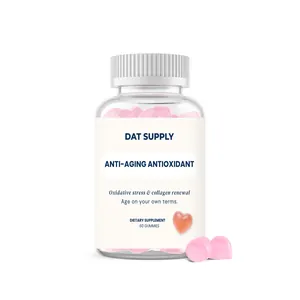
Anti-Aging Antioxidant Gummies
Anti-Aging Antioxidant Gummies is a white-label pectin-gummy supplement concept for brands building a beauty & skin range. Final positioning, claims and documentation are reviewed per project and target market.
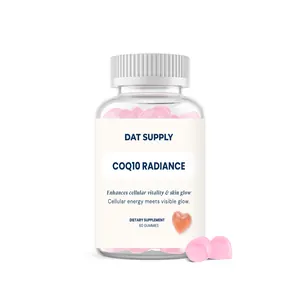
CoQ10 Radiance Gummies
CoQ10 Radiance Gummies is a white-label pectin-gummy supplement concept for brands building a beauty & skin range. Final positioning, claims and documentation are reviewed per project and target market.
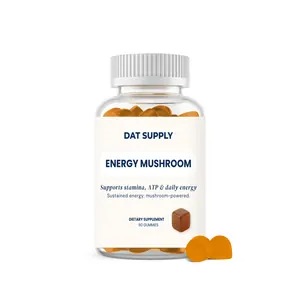
Energy Mushroom Gummies
Energy Mushroom Gummies is a white-label pectin-gummy supplement concept for brands building a botanicals & mushrooms range. Final positioning, claims and documentation are reviewed per project and target market.
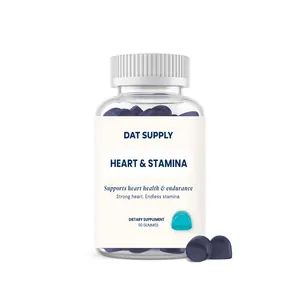
Heart & Stamina Gummies
Heart & Stamina Gummies is a white-label pectin-gummy supplement concept for brands building a men's health range. Final positioning, claims and documentation are reviewed per project and target market.
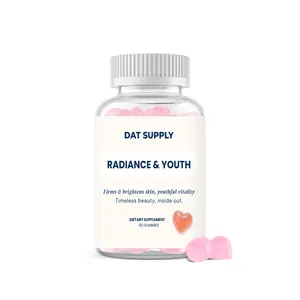
Radiance & Youth Gummies
Radiance & Youth Gummies is a white-label pectin-gummy supplement concept for brands building a beauty & skin range. Final positioning, claims and documentation are reviewed per project and target market.
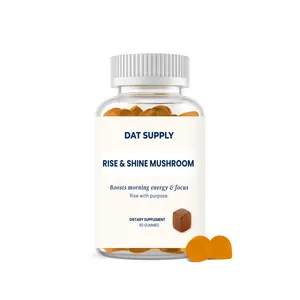
Rise & Shine Mushroom Gummies
Rise & Shine Mushroom Gummies is a white-label pectin-gummy supplement concept for brands building a botanicals & mushrooms range. Final positioning, claims and documentation are reviewed per project and target market.
Synergies & conflicts
Pairs well with
Pairs with Selenium (antioxidant), Acetyl-L-Carnitine (mitochondrial support), Magnesium (ATP synthesis).
Care when combining with
Fat-soluble — gummy is an ideal format. Statins deplete CoQ10. Cardioprotection is well-studied. Premium cost is justified by the ingredient's value.
Similar ingredients
Ingredients that frequently sit alongside this one in private-label supplement briefs.

Apple Cider Vinegar
Apple Cider Vinegar (ACV) is a fermented food product made from apple juice, containing acetic acid as its principal characterised active. In gummy formats it is one of the most commercially significant 'functional food' SKU categories globally, typically positioned within weight & metabolism or daily-wellness ranges. ACV itself has no EU-authorised health claim under Reg. 432/2012; substantiated claim wording is derived from co-formulated nutrients such as Chromium or B-vitamins.
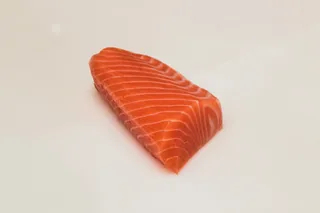
Astaxanthin
Astaxanthin is a naturally occurring carotenoid pigment sourced from the microalgae Haematococcus pluvialis. It is used in food supplements for its antioxidant properties. Under EU Regulation 432/2012, astaxanthin has no authorised health claims; any claim coverage on pack must come from co-formulated nutrients.

Chlorophyll
Chlorophyll is the green pigment found in plants, responsible for photosynthesis. In gummy manufacturing, it is used primarily as a natural green colour and for general wellness positioning. It has no EFSA-authorised health claims under Reg. (EU) 432/2012, so claim coverage must come from co-formulated nutrients.
Collagen
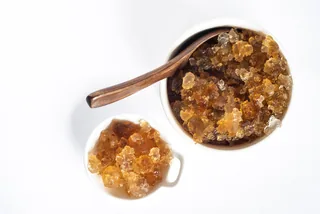
Collagen is the most abundant structural protein in the human body and the foundation of skin, joint, and connective-tissue architecture. In gummy formats it is most commonly positioned within a beauty stack alongside Vitamin C, which carries the EU-authorised health claim for normal collagen formation for the normal function of skin. Collagen itself has no authorised health claim under Regulation 432/2012.
Omega-3 (Fish Oil)
Omega-3 fish oil provides the long-chain polyunsaturated fatty acids EPA (eicosapentaenoic acid) and DHA (docosahexaenoic acid), sourced from marine fish. It is one of the most familiar and commercially understood gummy actives across EU and US markets. Under EU Regulation 432/2012, authorised claims include contributions to normal heart function, brain function, vision, and blood triglyceride levels.
Adjacent reading
Pairings, resource guides and blog notes most often associated with CoQ10 on DAT Supply briefs.
Develop a formula featuring CoQ10
A ready white-label formula exists — open a product brief, or talk to our team to align the launch plan.