L-Arginine HCl
L-Arginine HCl is used in private-label supplement manufacturing. Sourcing, dose anchors and target-market documentation are reviewed per project.
- 1 Select
- 2 Review
- 3 Sample
- 4 Approve
- 5 Produce
- 6 Deliver
Why brands use L-Arginine HCl
L-Arginine HCl is an amino acid commonly considered for energy, recovery and cognitive ranges, sitting in the amino acids family. On DAT Supply briefs the positioning is set by the brand brief and reviewed against the target market’s claim rules — we do not pre-position an active for any single benefit. Editorial framing uses only EU 432/2012- or DSHEA-compatible wording — we never promote unauthorised claims, even when the active has consumer-side momentum. Format-wise we have considered L-Arginine HCl for gummies, capsule, softgel, powder and drops; the per-format formulation notes below describe the live constraints (taste, payload, stability, packaging) we tune in the formulation pass. Sourcing form (extract ratio for botanicals, salt or chelate form for minerals, free-form vs ester for amino acids) is reviewed against the brief, with documentation matched to the target market’s import rules. Inclusion rate and claim wording are reviewed per project — no two briefs land on the same combination, and we don’t publish off-the-shelf doses.
Formats this ingredient is reviewed for
DAT Supply covers gummy, capsule, softgel, tablet, powder, oral strip, liquid drop, shot, jelly and pet formats. The list below reflects every format this ingredient is reviewed for — chips link through to the manufacturing hub for each format. Final compatibility, dose and matrix are confirmed per project.
Format suitability reviewed per project.
How we use L-Arginine HCl in formulas
A public-safe formulation reference — how this active behaves in our formats, common pairings and handling notes. Final formulation, dose and on-pack copy are confirmed per project.
- Heat stable
- Limited — use coated forms
- Soluble in matrix
- Conditional
- Vegan supply
- Project-specific
Per-format formulation notes
Safe-baseline considerations for each format this ingredient is reviewed for. Final formulation, dose and on-pack copy are confirmed per project.
Gummies
In a pectin- or gelatin-based gummy matrix, L-Arginine HCl is reviewed for heat stability through the cooking step, dispersibility across the dosed mass, and any flavour interaction with the cooked base. Coated or encapsulated forms may be considered when the raw active would shift taste or colour outside the target window. Per-gummy payload, daily serving count and the resulting label claim are tuned against the brand’s pack architecture. Pectin and gelatin behave differently for moisture migration and shelf-life — the matrix choice is reviewed per project alongside the active’s sensitivity to acidity, light and oxygen. Where a high inclusion rate would compromise gummy texture, we split the load across two pieces or move to a denser format. Final dosing and matrix selection are confirmed per project.
Capsules
In a two-piece capsule format L-Arginine HCl is reviewed for fit against the chosen capsule size, the blend’s bulk density and flow, and any excipient set needed for stable filling. Shell choice (gelatin vs HPMC for vegan ranges) is tuned against the active’s moisture sensitivity and the brand’s diet positioning. Capsules carry medium-to-high payloads and let the brand split a multi-active stack across one or two daily servings, with the daily serving count reviewed per project. Where the active is hygroscopic or has a strong odour, we may pre-coat or granulate before filling. Final excipient set, capsule size and per-serving load are confirmed per project.
Softgels
In a softgel format L-Arginine HCl must be oil-soluble or oil-dispersible; water-loving actives sit on the gummy or capsule route instead. The fill carrier (a refined oil or a co-solubilising system) is reviewed against the active’s oxidation profile and shelf-life targets, with antioxidant load tuned where the active is prone to oxidation. Shell choice (gelatin vs non-gelatin for vegan ranges) is set against the brand’s diet positioning, and the shell-fill interaction is reviewed for water migration. Softgel size and per-piece fill weight are tuned against the target dose — reviewed per project alongside the brand’s daily serving plan and pack format.
Powders
In a powder format L-Arginine HCl is reviewed for flow, bulk density and blend uniformity, plus dispersibility and taste on reconstitution. Hygroscopic actives may need a desiccant, a moisture-barrier pouch, or an aluminium-laminate tub liner. Powder lets the brand carry the highest per-serving payloads of any DAT format, which can suit collagen-, protein- or electrolyte-positioned ranges. Pack format (tub, sachet, stick) is set against the daily serving plan and the brand’s shopper context — at-home tubs vs on-the-go sticks. Particle size, sweetener / acidulant balance and any flow aid are tuned per project to land the target sensory window.
Liquid drops
In a liquid-drop format L-Arginine HCl must be soluble or stably dispersible in the chosen carrier (water, glycerin, oil or a mixed system). Taste masking, preservation, pH window and shelf-life targets are reviewed against the active’s sensitivity profile. Bottle and dropper geometry are matched to the target per-drop dose, with serving accuracy validated through the dropper’s drop-volume specification. Liquids carry sensitive actives well but require a tighter shelf-life and packaging plan than dry formats. Where the active is light-sensitive, amber glass or barrier-tinted PET is reviewed against the run plan. Preservation system and pH are set per project.
Claim framework
As a free-form amino acid L-Arginine HCl is positioned with EU 432/2012-compatible wording where an authorised claim exists; otherwise editorial wording stays neutral and structural, focused on the active’s role in the body rather than a benefit. UK rules track EU wording. For the US market, DSHEA structure-function rules apply with the FDA disclosure. Inclusion rate is reviewed against the target positioning — sports, recovery, sleep or cognitive — and confirmed per project. Where an amino acid stack is on the brief, the per-active balance and the combined per-serving load are reviewed against the chosen format’s payload window.
Typical anchor: mg per serving — confirmed per project.
L-Arginine HCl is measured by weight (mg) per serving on DAT Supply briefs. The working anchor — the inclusion rate against which target-market claim wording is reviewed — is set during the formulation pass for each project rather than published as a fixed number on the public page. Final per-serving load depends on the chosen format (gummy payload window, capsule fill weight, softgel oil load, sachet or powder scoop size, oral-liquid bottle geometry) and the claim wording the brand needs to support against the target market. Sourcing form (extract ratio, standardised marker, micronised vs granular, salt or chelate form) is reviewed in the same pass. Country-level upper limits (France, Italy, Belgium for the EU; California Prop 65 for the US) are checked before any inclusion rate is finalised. Dose is confirmed per project — we don’t publish off-the-shelf dose tables for any active in the catalogue.
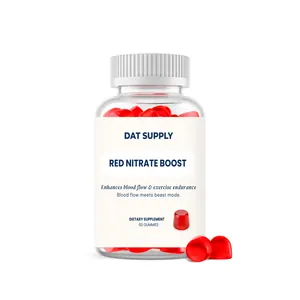
Formulas using L-Arginine HCl
Private-label options where L-Arginine HCl is in the formula — a ready starting point for your brand.
Similar ingredients
Ingredients that frequently sit alongside this one in private-label supplement briefs.
Beta-Alanine
Beta-Alanine is used in private-label supplement manufacturing. Sourcing, dose anchors and target-market documentation are reviewed per project.

Creatine Monohydrate
Creatine Monohydrate is used in private-label supplement manufacturing. Sourcing, dose anchors and target-market documentation are reviewed per project.

Echinacea Extract
Echinacea Extract is used in private-label supplement manufacturing. Sourcing, dose anchors and target-market documentation are reviewed per project.
GABA
GABA is used in private-label supplement manufacturing. Sourcing, dose anchors and target-market documentation are reviewed per project.
L-Carnitine Tartrate
L-Carnitine Tartrate is used in private-label supplement manufacturing. Sourcing, dose anchors and target-market documentation are reviewed per project.
L-Citrulline
L-Citrulline is used in private-label supplement manufacturing. Sourcing, dose anchors and target-market documentation are reviewed per project.
Build a formula around L-Arginine HCl
Explore the private-label options that use L-Arginine HCl, or order samples to review formula, flavour and texture before you commit.